
Key Takeaways:
- Heavy Florida rain forces water into small pavement cracks, turning minor damage into deep potholes quickly.
- Poor parking lot drainage causes standing water to sit, softening the subbase until the asphalt collapses.
- Working catch basins and correct surface sloping keep water moving completely away from traffic zones.
- Early commercial repairs protect property owners from major legal liabilities and expensive emergency bills.
_________________________________________________________________________________________________________
Florida’s rainy season hits hard and fast. Every afternoon, heavy downpours put your commercial property through a brutal stress test. Pavement issues that seemed minor during the dry spring months suddenly turn into massive headaches. Most of these issues come down to poor parking lot drainage.
When rain pools on your blacktop, it eats away at your investment and creates immediate safety risks. Property managers and HOA board members cannot afford to look past these problems until it is too late.
What Causes Parking Lot Drainage Problems?
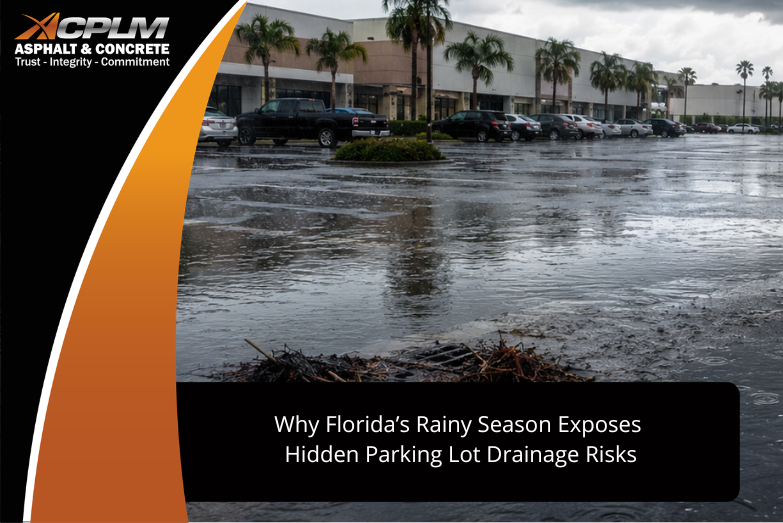
Standing water means your water has nowhere to go. Usually, parking lot drainage problems start with clogged storm drains, compressed soil, or bad grading.
Florida’s intense sun and high humidity dry out asphalt over time. This creates tiny hairline cracks. When the summer storms roll in, water pushes deep into those cracks and destroys the dirt foundation underneath. Once a heavy vehicle drives over that weak spot, the surface caves in.
That is exactly how you get a pothole.
Watch out for these warning signs on your property:
- Puddles that stay for over a day after a storm.
- Interconnected cracking asphalt that looks like alligator skin.
- Mud, leaves, or trash piling up around your drain grates.
- Depressions or sunken asphalt where heavy trucks park.
How Do Parking Lot Drainage Systems Work?
A good setup relies on gravity to keep traffic lanes clear. Parking lot drainage systems need to catch water and move it off the property fast. The entire parking lot drainage design must direct rain toward specific collection points before it causes trouble.
Here is how standard drainage systems handle a major storm:
- Surface Slope: The asphalt must tilt slightly so water runs off instead of pooling.
- Concrete Curbs: These borders act like gutters, channeling runoff along the edges.
- Catch Basins: These heavy underground boxes collect the water while keeping large debris out.
- Drain Pipes: Underground lines dump the collected water into the local city storm system.
What Are the Best Parking Lot Drainage Solutions?
You have to fix the actual cause of the ponding water, not just slap a temporary patch over it. Effective parking lot drainage solutions depend on how deep the damage goes.
- Catch Basin Repair: Rebuilding the internal brick and mortar stops the surrounding asphalt from sinking.
- Skin Patching: Layering new asphalt over low spots helps correct minor parking lot water drainage issues.
- Full-Depth Reclamation: Tearing out ruined asphalt to rebuild the stone base fixes major structural failures.
- Concrete Curb Work: Fixing broken concrete sections prevents water from seeping under the pavement edge.
Why Should You Hire Parking Lot Drainage Contractors Early?
Waiting to hire parking lot drainage contractors will cost you. Puddles and shifted concrete create uneven sidewalks that present major trip hazards for residents and customers.
Deep water also hides potholes that can bend wheel rims or damage vehicles. Plus, standing water quickly erases paint, leaving you with faded striping and non-compliant ADA spaces. Partnering with the best contractors for parking lot drainage problems early keeps your parking lots safe and legal.
Plus, standing water quickly erases paint, leaving you with faded striping and non-compliant ADA spaces. Partnering with the best contractors for parking lot drainage problems early keeps your parking lots safe and legal.
What Are the Most Common Parking Lot Drainage Questions?
How long should water sit in a parking lot after it rains?
It should clear out completely within 24 hours. If you still see puddles after a day of dry weather, your drainage is failing.
Can standing water ruin asphalt?
Yes, absolutely. Water breaks down the liquid asphalt binder that glues the rocks together. It destroys the subbase foundation.
How often should catch basins be cleaned?
Clean them out at least once a year. In Florida, it is smartest to clear them out right before the summer rain starts.
What is the ideal slope for parking lot water drainage?
A commercial lot needs at least a 1% to 2% slope so gravity can pull the water toward the drains.
Protect Your Property with ACPLM
Maintaining pavement in Florida requires a team that understands our heavy storms and sandy soil. ACPLM handles commercial asphalt and concrete fixes for HOAs, condos, apartments, and commercial properties throughout Florida.
We also believe in educating our clients. We offer property managers and maintenance teams accredited CEU courses and non-accredited training sessions. We can cover asphalt care, concrete fixes, and ADA rules right at your office.
To make it easy, we bring breakfast or lunch as part of our Lunch & Learn program. Every attendee gets our practical Asphalt & Concrete RFP Guide to help you write clear bid requests and get accurate, fair proposals.
Contact Us Today to Schedule a Free Consultation and Learn More About Our CEU Courses & Training

