Key Takeaways
- Rushing the initial excavation phase guarantees structural pavement failure within the first few years of operation.
- Failing infrastructure, like sinking dumpster pads and collapsing catch basins, stems directly from inadequate subgrade preparation.
- Investing in accurate initial site preparation yields a high commercial site work ROI by eliminating remediation expenses.
- Partnering with an experienced local subcontractor helps ensure compliance with Florida building codes and native soil requirements.
______________________________________________________________________________________________________________________________________
Skimping on the initial phases of a construction project creates a massive financial trap for real estate investors and developers. Rushing through the earthwork phase to meet tight deadlines frequently backfires, causing site development costs in Florida projects to skyrocket post-construction.
When project plans ignore the specific engineering demands of native soil, subgrade instability quickly destroys your new pavement.
Choosing a cheap or inexperienced subcontractor guarantees that you will pay double for repairs later.
Experienced project management teams understand that a parking lot is only as stable as the ground beneath it. Failing to detect unstable organic matter or poor moisture levels prior to paving results in rapid degradation.
This guide breaks down the financial risks of inadequate preparation and shows how professional site work protects your long-term construction budgets.
The High Price of Rushed Earthwork
When estimators evaluate initial cost estimates, site preparation can look like an easy place to shave off a few dollars. This mindset frequently leads to construction budget overruns during or shortly after the development project finishes.
Property managers and developers often watch their brand-new asphalt crack and sag within months of completion. These structural issues do not stem from bad asphalt, but rather from rushed and flawed base preparation.
The hidden costs of poor excavation show up after heavy vehicles begin utilizing the property. Office buildings, retail centers, and logistics hubs experience heavy daily traffic patterns that put immense pressure on the pavement foundation.
If the earthwork phase misses pockets of muck or uncompacted sand, the weight of these vehicles causes the upper pavement layers to flex and break. This structural failure requires immediate, expensive intervention to prevent total site degradation.
The Real-World Consequences of Subgrade Neglect
Ignoring proper stabilization protocols leads to highly predictable, localized failures across your asset. These individual failures destroy the aesthetic value of your property and create significant liability concerns.
Addressing these issues early via proper site prep prevents your capital improvement budgets from costly overruns.
Sinking Dumpster Pads and Heavy Vehicle Stress
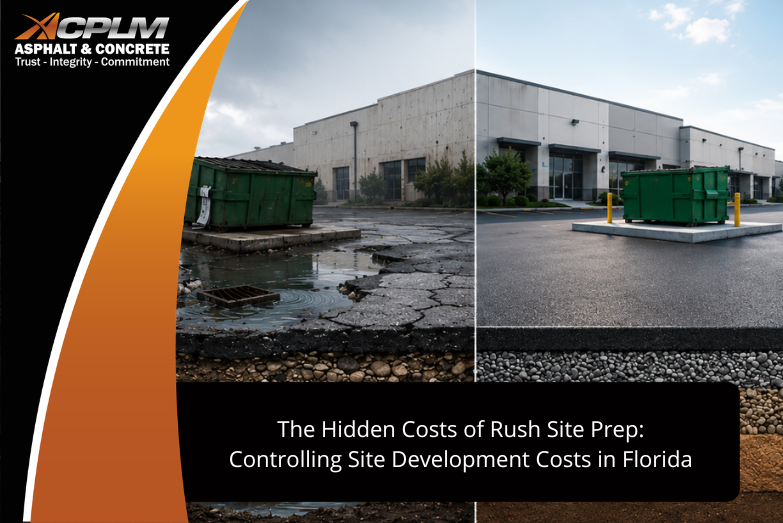
Waste management trucks exert extreme structural loads on concrete and asphalt surfaces during weekly pickups. If the subgrade underneath the concrete pad lacks proper load-bearing capacity, the heavy weight causes the entire slab to tip and sink into the ground.
Property owners then face expensive dumpster pad repair costs to level the zone area and replace shattered concrete. Proper planning during the initial site prep phase reinforces these high-stress zones with thick, highly compacted aggregate base layers.
Failing Catch Basins and Drainage Collapse
Water mitigation is a critical component of any site design, especially across Central Florida. Poor excavation around drainage structures leads to soil erosion and subsequent structural shifting. This shifting triggers underground pipe separation, creating subbase voids that swallow the surrounding pavement.
Dealing with failing catch basin fixes requires deep excavation, utility alignment, and new asphalt installation, which easily compromises your ongoing cost management goals.
Collapsing Asphalt Overlays
Many developers attempt to fix early surface cracking by simply rolling a fresh layer of asphalt over the damaged area. This approach fails because reflective cracking occurs when the underlying subgrade remains unstable.
The underlying movement forces the new overlay to split along the exact same fracture lines within a matter of months. True remediation requires cutting out the failed sections completely down to the dirt, which ruins your initial project scopes and financial projections.
The Financial Blueprint: Doing It Right vs. Retroactive Fixes
The financial impact of skipping proper site work becomes obvious when you contrast initial precision against emergency structural remediation. Project plans must account for these realities to keep construction budgets balanced.
While asset managers recommend sealcoating a parking lot every 3 to 5 years to protect the top layer, surface sealants cannot rescue a collapsing foundation.
The following table outlines the stark difference in average costs between doing the work right during initial development versus repairing failures later.
| Development Phase / Asset Element | Initial Right-the-First-Time Cost | Retroactive Remediation Cost | Long-Term Operational Impact |
| Subgrade Compaction & Stabilization | Standard baseline budget inclusion | 3x to 4x initial cost due to demolition | Deep structural cracks, downtime for business tenants |
| Drainage Concrete Structure Install | Standard design-build integration | High cost per unit for emergency fixes | Severe flooding, liability claims, pavement erosion |
| Heavy Traffic Utility Zones | Rebar reinforced pads built to spec | Complete removal, re-pouring, and base repair | Broken structural slabs, disrupted waste management |
As the numbers indicate, a high site work ROI relies on avoiding costly, reactive maintenance. Proper planning and executing a disciplined layout from day one helps ensure your asset stays open and safe. This protective approach shields owners from unexpected cost overruns in construction projects.
Problem-Solution Framework for Commercial Paving
Understanding the mechanics of pavement failure helps developers make informed decisions during the initial planning phase. Industry engineers and experienced contractors emphasize a direct relationship between subgrade preparation and surface longevity.
The Problem: Structural Asphalt Failure
Parking surfaces develop deep alligator cracking, severe rutting, and dangerous potholes within two years of construction. These defects create immediate safety hazards for visitors and tenants, which reduces the overall value of development projects.
The Hidden Cause: Rushed Subgrade Preparation
The root cause of this premature deterioration is a soft, shifting foundation layer beneath the stone base. The contractor failed to clear organic topsoil, ignored moisture-density targets, or rushed past the final grading sequence to save time.
The ACPLM Solution: Precise Grading and Moisture Control
The ACPLM team executes a methodical site prep regimen that aligns with the American Society of Civil Engineers (ASCE) parameters. We eliminate organic pockets, grade the dirt to optimize water runoff, and compact the subgrade to its maximum dry density before any asphalt touches the ground.
This systematic approach helps ensure the prevention of premature paving failure.
Why a Local Florida Site Work Subcontractor Matters
Florida’s unique geological makeup features volatile limestone formations and highly permeable, low-cohesion sand. An out-of-state general contractor or inexperienced local crew might treat this earthwork like a standard dirt project, which represents a major mistake. Localized knowledge of regional water tables and soil mechanics is mandatory to protect your investment.
A qualified Florida site work subcontractor understands how local weather patterns and high water tables affect soil stability. For instance, Florida Building Code Chapter 18 dictates specific foundation and load-bearing requirements that demand strict adherence. Our crew brings years of experience navigating these localized regulations to help ensure your site passes inspection without delays.
We analyze the silt content, verify moisture levels, and perform compaction testing to guarantee structural integrity. This meticulous attention to detail ensures your project starts on a firm foundation, making your total site development costs in Florida more predictable.
FAQs
How much does it cost to fix a failing catch basin in Florida?
The average costs to fix a failing catch basin in Florida typically range from $3,500 to $8,500 per unit depending on the structural damage. This price includes deep excavation, replacing damaged concrete rings, stabilizing the surrounding subgrade, and patching the broken asphalt.
What are the main causes of cost overruns in construction projects?
The primary causes of cost overruns in construction projects are inaccurate initial cost estimates, unexpected site conditions, and rushed site preparation. Failing to detect poor soil quality early results in structural failures that require expensive remediation.
Why do dumpster pads sink into parking lots?
Dumpster pads sink because the subgrade beneath the concrete slab was not properly stabilized to handle heavy trash collection vehicles. Without professional compaction and proper stone base thickness, the heavy weight forces the entire concrete pad into the shifting soil.
How does proper planning improve commercial site work ROI?
Proper planning improves site work ROI by eliminating the need for emergency structural repairs during the early lifespan of the pavement. Building a solid foundation ensures the asphalt lasts its full intended lifecycle without requiring premature demolition and rebuilding.
Protecting Your Long-Term Asset
Every development project represents a balancing act between timeline management and budget constraints. However, cutting corners on your site preparation services is a guaranteed recipe for future financial trouble.
The costs can vary depending on the size of your footprint, but the rule remains absolute: fix it now or pay much more later.
By investing in high-quality excavation, grading, and compaction from the start, you protect your pavement from early structural failure. This protective strategy ensures your property remains safe, attractive, and cost-effective for decades.
Partnering with a proven industry leader like ACPLM keeps your construction budget on track from the very first scoop of dirt.
Ready to secure your next commercial build? Contact ACPLM today to schedule a Comprehensive Site Evaluation Consultation with our expert engineering estimators.

